
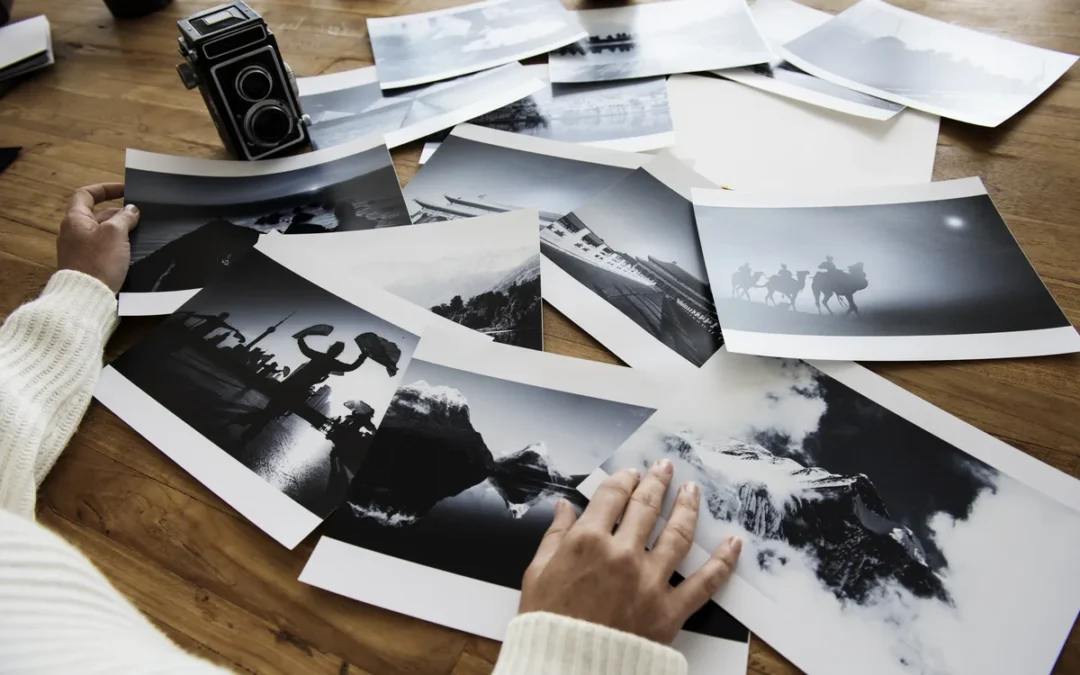
Printing archive photographs for a public display usually involves decisions about the scope of work, the budget and who will use the finished material. The most useful starting point is to agree what your team needs customers or staff to be able to do. In this case, that means commissioning photographic printing with a focus on trade-offs.
What a good proposal includes
Flag original photographs with surface flaws, cropped edges or unknown reproduction limits. A good supplier can explain to you to distinguish reproduction choices from editorial decisions that belong to the archive owner.
For this commission, ask the supplier which decision should be settled first and which can wait until you have seen evidence from a relevant example. For photographic printing, that evidence might include paper samples, proofs and mounted or framed work. Ask how it will help you judge trade-offs.
The brief should name the audience, the context and what a successful handover looks like. The buyer’s goal is a coherent set of prints suited to its display conditions. A good supplier should explain the implications of surface, lighting, mounting, and consistency across a set in plain English and show how those considerations affect the proposed work.
What an experienced creative partner brings
A smaller first scope can be worthwhile if expansion is straightforward. Where a later change means paying twice for the same work, an initial saving can be misleading.
Identify one constraint that can move and one requirement that genuinely cannot. In the discussion, ask for an example that shows how the supplier handled surface, lighting, mounting, and consistency across a set. Bring someone who understands the day-to-day work. They often spot an avoidable source of delay or a requirement that was missing from the written brief.
Be clear about which part of the proposal depends on your team. That may include confirming locations, making an approver available, providing existing assets or agreeing what the customer sees first. Get those handoffs into the timetable while there is still room to change it.
What affects value and cost
Ask for an example of a recent project that had a similar constraint. What was agreed at the start, what changed and how was the change priced? The value of the example is in what it reveals about collaboration, judgement and the cost of getting approvals late.
When comparing proposals, look past an attractive image on a calibrated screen. Put the cost alongside the assumptions that make it possible. Check what happens if the quantity or scope changes, how revisions are handled, and whether the team receives final files or documentation in a usable format.
What a good handover looks like
It helps when a supplier is able to explain what they would review with you before final approval. That could be a sample of paper samples, proofs and mounted or framed work or a discussion about what happens in a typical customer journey. Agree how to record the decision and how long your team will have to respond.
A good supplier can explain to you how they would judge whether the work delivers a coherent set of prints suited to its display conditions. One early review might look at whether a representative customer or member of staff can use it as intended. A later review can look at whether it is producing the practical benefits the team expected.
If the project is time-sensitive, agree the last date for supplying assets and the last date for approval. Ask who can make day-to-day decisions when the named approver is away. For ongoing work, agree when you will revisit the arrangement, who brings the evidence and how changes will be documented.
Related reading
Need a partner for your print project?
Twisted Pixels is a one-stop shop for graphic design, web design, print, signage and digital marketing. We can discuss photographic printing, display artwork and the wider design or marketing around the project together. That’s useful when the same images need to work in a venue, on printed material and online. If your requirements span more than one service, we can discuss them together and put a clear scope around the work.
Call 0333 006 3993 or email sales@twistedpixels.net to tell us what you need. You can also explore our photographic printing services before getting in touch.