by twistedpixels | Aug 30, 2023 | Full Colour Printing
Decide whether languages share a layout or need separate versions. Print decisions affect cost and usability together. Agree the finished size, quantity and intended use before locking in artwork or asking suppliers to compare prices.
Make the decision
Leave enough room for text expansion and have each version reviewed.
Check the result
Check page order, reading direction and version names before printing. For a trial, use the actual artwork and ask for a sample with similar stock and finish. Record what changed between the proof and final file so it can be checked on the next run.
Test it on a practical example
As a working exercise, choose one live example you can check from start to finish. Write down the intended result before comparing versions, or it will be difficult to tell whether a later change improved anything.
- Leave enough room for text expansion and have each version reviewed.
- Check page order, reading direction and version names before printing.
- Compare the final result with the intended use, and record who will confirm that it is ready.
Compare samples at the intended finished size under ordinary lighting. A sheet might look good while lying flat and still be hard to read when folded or displayed in a rack. Include the actual paper and finishing choices wherever possible. Ask which specifications could change cost or lead time before approving a run.
What to record before sign-off
Retain the signed-off PDF and list the stock, quantity, dimensions and delivery date alongside it. If a specification or file changes, check that the latest artwork and quotation describe the same job.
For help with this work, explore our full colour printing in East Kilbride and Glasgow or tell us about your project.
Related reading
by twistedpixels | May 6, 2023 | Full Colour Printing
Use the amount and order of information to choose between panels and faces. Print decisions affect cost and usability together. Agree the finished size, quantity and intended use before locking in artwork or asking suppliers to compare prices.
Apply it to a real example
Check postal, rack or distribution dimensions before deciding.
Review before approval
Fold a mock-up and confirm the strongest message appears on the first panel. For a trial, use the actual artwork and ask for a sample with similar stock and finish. Record what changed between the proof and final file so it can be checked on the next run.
Test it on a practical example
As a working exercise, choose one live example you can check from start to finish. Write down the intended result before comparing versions, or it will be difficult to tell whether a later change improved anything.
- Check postal, rack or distribution dimensions before deciding.
- Fold a mock-up and confirm the strongest message appears on the first panel.
- Compare the final result with the intended use, and record who will confirm that it is ready.
Compare samples at the intended finished size under ordinary lighting. A sheet might look good while lying flat and still be hard to read when folded or displayed in a rack. Include the actual paper and finishing choices wherever possible. Ask which specifications could change cost or lead time before approving a run.
What to record before sign-off
Retain the signed-off PDF and list the stock, quantity, dimensions and delivery date alongside it. If a specification or file changes, check that the latest artwork and quotation describe the same job.
For help with this work, explore our leaflet printing in East Kilbride and Glasgow or tell us about your project.
Related reading
by twistedpixels | Apr 5, 2023 | Full Colour Printing
Provide size, stock, sides, quantity, finishes and delivery requirements. Print decisions affect cost and usability together. Agree the finished size, quantity and intended use before locking in artwork or asking suppliers to compare prices.
Make the decision
Check whether proofing, artwork and delivery are included.
Check the result
Compare like-for-like quotes by matching the production specification. For a trial, use the actual artwork and ask for a sample with similar stock and finish. Record what changed between the proof and final file so it can be checked on the next run.
Test it on a practical example
As a working exercise, choose one live example you can check from start to finish. Write down the intended result before comparing versions, or it will be difficult to tell whether a later change improved anything.
- Check whether proofing, artwork and delivery are included.
- Compare like-for-like quotes by matching the production specification.
- Compare the final result with the intended use, and record who will confirm that it is ready.
Compare samples at the intended finished size under ordinary lighting. A sheet might look good while lying flat and still be hard to read when folded or displayed in a rack. Include the actual paper and finishing choices wherever possible. Ask which specifications could change cost or lead time before approving a run.
What to record before sign-off
Retain the signed-off PDF and list the stock, quantity, dimensions and delivery date alongside it. If a specification or file changes, check that the latest artwork and quotation describe the same job.
For help with this work, explore our full colour printing in East Kilbride and Glasgow or tell us about your project.
Related reading
by twistedpixels | Mar 30, 2023 | Full Colour Printing
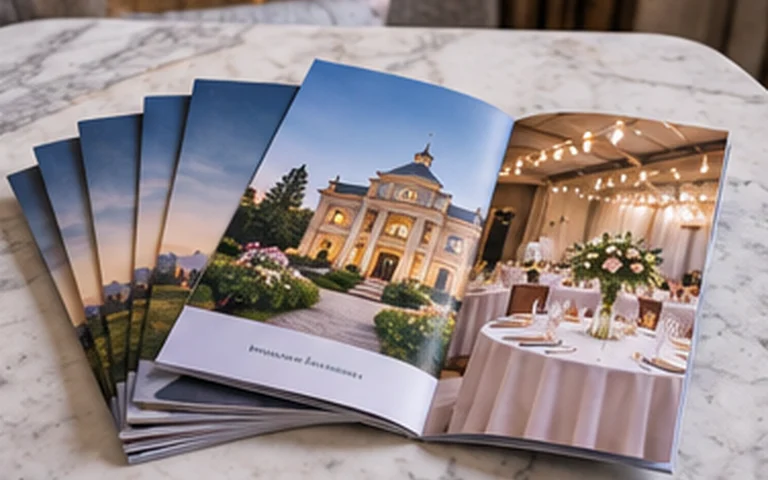
For event organisers and venue managers, the commercial value of brochure printing is a printed publication that suits its page count and intended use. Visitors need confidence about dates, locations and what to expect before they commit.
A typical decision might involve a fixed event date with a short window for amendments before launch. This is an illustrative brief. It points to the kind of evidence to ask for and helps explain why a quote may differ from a superficially similar job.
Choosing a suitable scope
The comparison here is a short run for changing material versus a longer run for stable content. Neither option has value in isolation. The right scope depends on whether the immediate priority is a coherent experience from promotion through arrival and follow-up, and whether the on-site team that needs current show information without searching several sources can maintain what has been agreed. A smaller commission can work well where there is one clear deadline and a stable offer. Where several teams or formats are involved, a broader scope may prevent duplicated effort, conflicting information or production delays.
Material, format and placement can affect what a customer sees in practice. A close-up proof has a different job from an example viewed from the pavement or on a phone. A useful professional proposal explains the relevant checks and who takes responsibility for each one.
What affects the quote
The most relevant quote factors are page count, paper choices, binding and quantity. Request a specification that distinguishes cover and inner pages. Ask the provider to identify the assumptions behind the price, the work included and which changes would require another estimate. Two quotes can differ because one includes approval, production, delivery or ongoing support that the other treats as separate work. A fair comparison puts both proposals against the same business outcome and the same final deliverables.
What you can expect to receive
A useful proposal should specify printed copies with the agreed stock, binding and finish. For events and venues, the conversation will usually be clearer when the business can share venue information, approved timings, visitor routes and production deadlines. That information helps the supplier assess the scope and highlight anything the team still needs to decide. It also gives the people responsible for approval something concrete to review before the work moves into production or launch.
How to judge the completed work
Agree what a usable result looks like for event organisers and venue managers. A plausible success test is whether the work supports a coherent experience from promotion through arrival and follow-up, under the conditions the business sees day to day. Ask what the supplier will present for approval and who will own any issue spotted at that point. For a fixed deadline, check what date the supplier needs final approval, and what options are available if an essential detail changes.
Discussing your project with Twisted Pixels
Twisted Pixels can discuss the brief with event organisers and venue managers in East Kilbride, Glasgow and the surrounding area. Tell us what the work needs to achieve, who it is for and when it needs to be ready. We can explain what a suitable scope is likely to include and where a sample, existing asset or more precise specification would make a quote more useful.
Explore brochure printing, browse Twisted Pixels Insights or discuss your brief with Twisted Pixels.
Related commissioning guides

by twistedpixels | Mar 6, 2023 | Full Colour Printing
When project leads and volunteer coordinators compare suppliers for leaflet printing, the useful question is whether the project will deliver leaflets suited to the amount of information and the distribution method. A wide audience may include people who have never encountered the organisation or its work.
A typical decision might involve a time-bounded public initiative with limited staff time and several stakeholders. This is an illustrative brief. It points to the kind of evidence to ask for and helps explain why a quote may differ from a superficially similar job.
Choosing a suitable scope
The comparison here is a single-sheet flyer versus a folded leaflet with more space. Neither option has value in isolation. The right scope depends on whether the immediate priority is information that is accessible and accurate with a clear route to participate, and whether staff and volunteers who will answer the same questions during the campaign can maintain what has been agreed. A smaller commission can work well where there is one clear deadline and a stable offer. Where several teams or formats are involved, a broader scope may prevent duplicated effort, conflicting information or production delays.
For a physical job, the production and delivery schedule may matter as much as the design time. An installation or print run can depend on details that a visual presentation does not reveal. Ask which decisions affect production and when the opportunity to make changes closes.
What affects the quote
The most relevant quote factors are format, folds, artwork readiness, quantity and delivery deadline. The finished size matters as much as the open size when distribution is constrained. Ask the provider to identify the assumptions behind the price, the work included and which changes would require another estimate. Two quotes can differ because one includes approval, production, delivery or ongoing support that the other treats as separate work. A fair comparison puts both proposals against the same business outcome and the same final deliverables.
What you can expect to receive
A useful proposal should specify proofed artwork and printed leaflets in the agreed format. For charities and community organisations, the conversation will usually be clearer when the business can share approved wording, programme details and a named reviewer for sensitive information. That information helps the supplier assess the scope and highlight anything the team still needs to decide. It also gives the people responsible for approval something concrete to review before the work moves into production or launch.
How to judge the completed work
Agree what a usable result looks like for project leads and volunteer coordinators. A plausible success test is whether the work supports information that is accessible and accurate with a clear route to participate, under the conditions the business sees day to day. Ask what the supplier will present for approval and who will own any issue spotted at that point. For a fixed deadline, check what date the supplier needs final approval, and what options are available if an essential detail changes.
Discussing your project with Twisted Pixels
Twisted Pixels can discuss the brief with project leads and volunteer coordinators in East Kilbride, Glasgow and the surrounding area. Tell us what the work needs to achieve, who it is for and when it needs to be ready. We can explain what a suitable scope is likely to include and where a sample, existing asset or more precise specification would make a quote more useful.
Explore leaflet printing, browse Twisted Pixels Insights or discuss your brief with Twisted Pixels.
Related commissioning guides
by twistedpixels | Feb 28, 2023 | Full Colour Printing
Compare actual samples for stiffness and surface feel. Print decisions affect cost and usability together. Agree the finished size, quantity and intended use before locking in artwork or asking suppliers to compare prices.
Working through the details
Check whether a coating will make the card hard to write on.
A check you can repeat
Approve the finished size, stock and finish together. For a trial, use the actual artwork and ask for a sample with similar stock and finish. Record what changed between the proof and final file so it can be checked on the next run.
Test it on a practical example
As a working exercise, choose one live example you can check from start to finish. Write down the intended result before comparing versions, or it will be difficult to tell whether a later change improved anything.
- Check whether a coating will make the card hard to write on.
- Approve the finished size, stock and finish together.
- Compare the final result with the intended use, and record who will confirm that it is ready.
Compare samples at the intended finished size under ordinary lighting. A sheet might look good while lying flat and still be hard to read when folded or displayed in a rack. Include the actual paper and finishing choices wherever possible. Ask which specifications could change cost or lead time before approving a run.
What to record before sign-off
Retain the signed-off PDF and list the stock, quantity, dimensions and delivery date alongside it. If a specification or file changes, check that the latest artwork and quotation describe the same job.
For help with this work, explore our business card printing in East Kilbride and Glasgow or tell us about your project.
Related reading
